Customer Support | Call us on 02 4257 1105 or reach out to us via email info@morgansports.com.au
Love Your New Equipment? Leave A Product Review & Win a $100 Gift Voucher | You Will be Contacted Via DM!

Customer Support | Call us on 02 4257 1105 or reach out to us via email info@morgansports.com.au
Love Your New Equipment? Leave A Product Review & Win a $100 Gift Voucher | You Will be Contacted Via DM!


Date Posted:20 March 2026
4 Minute Quick Read By Morgan Sports | B2B Gym Setup Guide
When you're equipping a commercial gym facility, the temptation to cut equipment costs is completely understandable. Fitout budgets are tight. There are a hundred other line items competing for your capital. And on the surface, a cheaper barbell looks a lot like an expensive one.
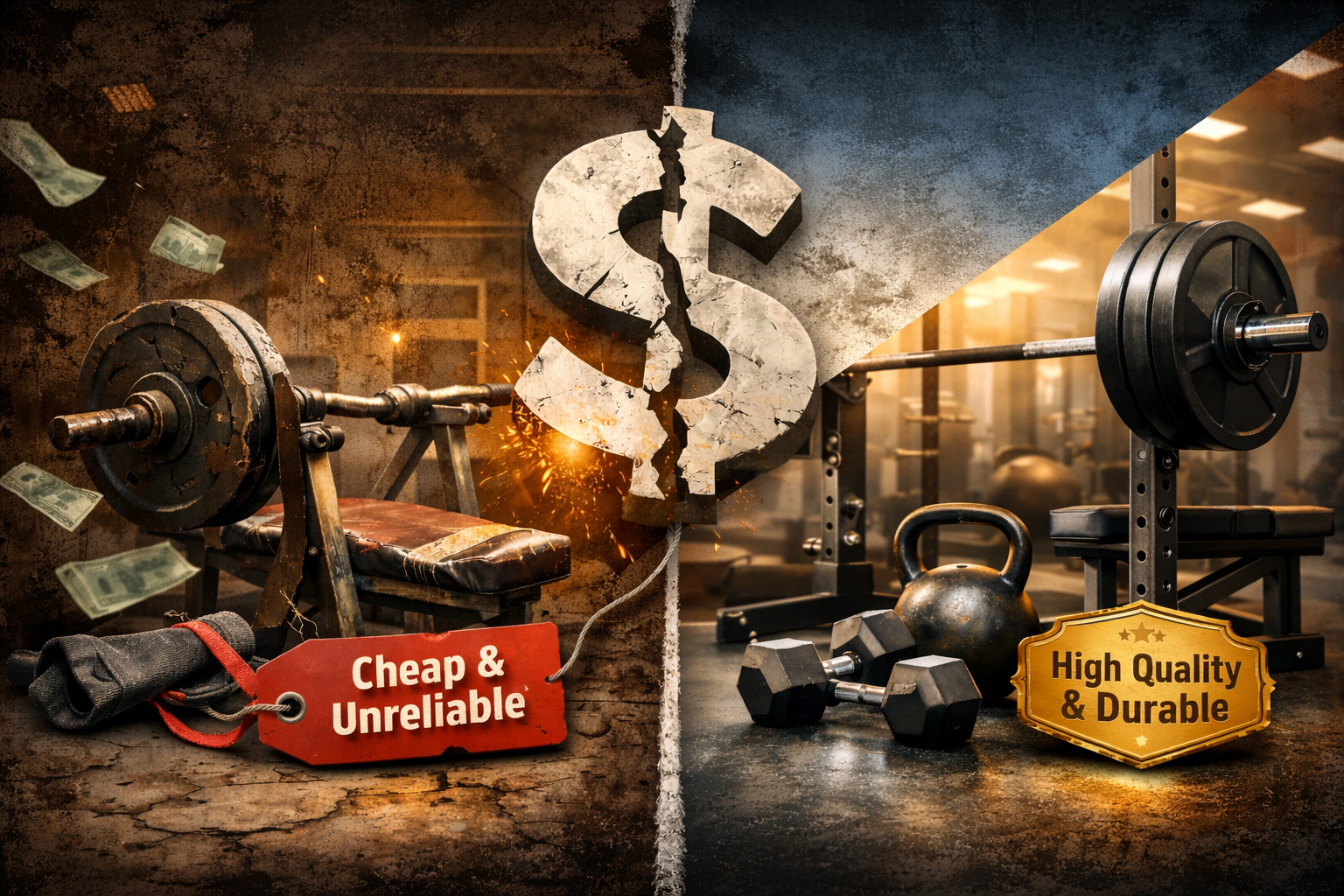
But in commercial fitness, the cheapest purchase price almost never equals the lowest total cost. And for B2B operators - gyms, schools, councils, corporate wellness centres - this distinction isn't academic. It's the difference between a facility that grows its membership and one that haemorrhages it.
This guide unpacks the hidden costs of cheap commercial gym equipment and explains what to look for when evaluating quality vs. price at a wholesale level.
1. Replacement Cycles That Destroy Your Budget
Consumer-grade or low-quality commercial equipment is typically rated for light-to-moderate use. In a busy gym environment - where a single barbell might be used 60–100 times per day, this equipment fails faster. Much faster.
A set of hex dumbbells that cost 30% less than commercial-grade alternatives might need replacing in 18 months. A commercial-grade set, properly maintained, can last 8–10 years. Run the numbers over a five-year horizon and the 'cheaper' option frequently costs two to three times more.
Before any equipment purchase, ask the supplier: what is the rated cycle life of this product under commercial use? If they can't answer, that's your answer.
2. Warranty Claims and Repair Costs
Commercial gym equipment takes a beating. Welds crack. Cables fray. Upholstery tears. Rubber coatings chip. In a high-use environment, these aren't edge cases, they're inevitable outcomes on a timeline determined by build quality. Cheap equipment typically comes with limited warranty coverage, narrow definitions of 'commercial use', and slow or non-existent parts availability. When something breaks, you either pay out of pocket for repair, live with broken equipment (which members notice immediately), or wear the cost of early replacement.
Morgan Sports' commercial range is backed by B2B warranty and trade support designed specifically for commercial operators. That's not a marketing claim, it's a structural difference in how the product is built and supported.
3. Member Perception and Retention
our members are not equipment experts. But they know when a bench wobbles, when a bar feels cheap, or when a cable machine is rough and noisy. They may not be able to articulate why a piece of equipment feels wrong, but they will feel it and it will influence whether they renew.
In a market where gym members have more choices than ever, equipment quality is a tangible differentiator. Word of mouth travels fast. Online reviews are permanent. A gym known for solid, well-maintained equipment commands premium pricing. A gym known for dodgy barbells and squeaky benches doesn't.
The ROI on quality equipment isn't just operational, it's directly tied to your membership retention rate.
4. Safety Liability and Insurance Exposure
This is the cost most facility owners don't think about until it's too late. Equipment failure that results in member injury creates liability exposure that can be devastating for small-to-medium fitness operators.
Commercially-rated equipment from reputable suppliers is typically tested to relevant Australian and international standards. Cheap, unverified equipment may not be and if a product failure injures a member, 'we bought the cheapest option we could find' is not a defence that will protect you in a claim.
When evaluating equipment, ask: Is this product commercially rated? What testing and certification standards does it comply with? Can the supplier provide documentation? These aren't bureaucratic questions, they're risk management essentials.
5. Opportunity Cost of Operational Disruption
Every time a piece of equipment goes offline for repair or replacement, it's not just a maintenance cost, it's an opportunity cost. Members can't use it. Staff spend time managing it. Your floor plan has a gap. If the item is popular, the disruption is visible and frustrating.
Commercial-grade equipment that is properly matched to your facility's usage volume minimises this disruption. It's not just about longevity, it's about the operational reliability of your business.
When evaluating competing equipment options, use this framework:
What Commercial-Grade Actually Means at Morgan Sports
Morgan Sports' commercial range including power racks and cages, Olympic barbells, dumbbell sets, functional conditioning gear, and heavy punching bags is built specifically for high-frequency commercial use. Products are sourced and tested for the demands of Australian fitness facilities, not repurposed from consumer-grade lines with a commercial label attached. For B2B operators, Morgan Sports also offers:
In commercial gym equipment, these are not the same number. The cheapest equipment on the market typically has the highest total cost when you account for replacement cycles,
maintenance, warranty gaps, member churn, and liability exposure. The right purchase decision isn't always the most expensive option, it's the option that delivers reliable performance at your facility's usage volume, backed by real commercial warranty and trade support.
Morgan Sports has been Australia's trusted B2B fitness equipment supplier for thousands of partners across the country. Get in touch today to explore wholesale pricing on commercial-grade equipment built to last.