Customer Support | Call us on 02 4257 1105 or reach out to us via email info@morgansports.com.au
Love Your New Equipment? Leave A Product Review & Win a $100 Gift Voucher | You Will be Contacted Via DM!

Customer Support | Call us on 02 4257 1105 or reach out to us via email info@morgansports.com.au
Love Your New Equipment? Leave A Product Review & Win a $100 Gift Voucher | You Will be Contacted Via DM!


Date Posted:9 March 2026
Quick Read By Morgan Sports ~4 min read | B2B Purchasing Guide
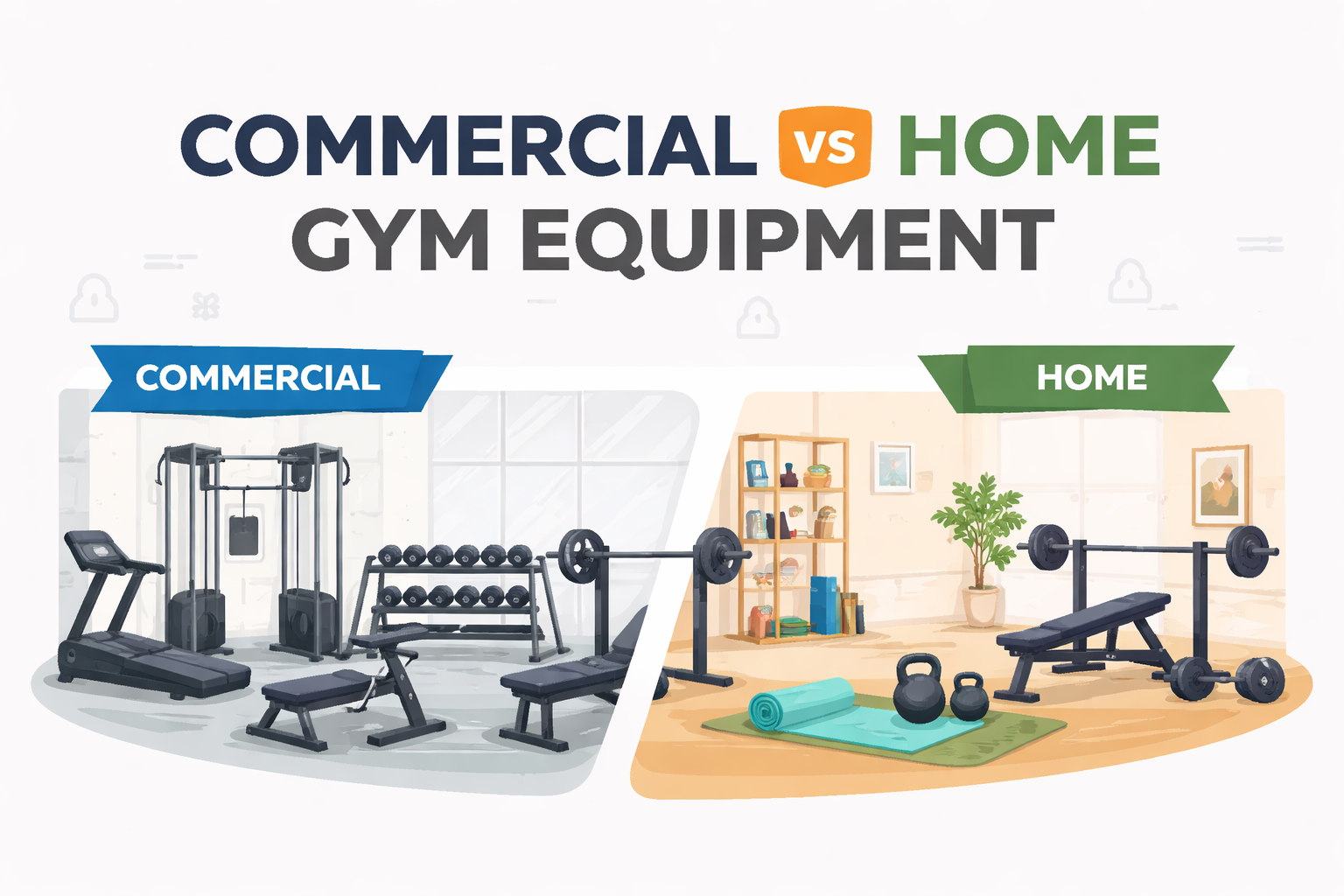
Walk into any major fitness equipment retailer and you'll notice that commercial-grade and consumer-grade products often look remarkably similar. Same barbells. Same benches. Similar price tags - until you look a little closer.
For fitness business operators - gyms, studios, schools, councils, and corporate wellness centres — this surface-level similarity is one of the most expensive misconceptions in the industry. Commercial and home gym equipment are fundamentally different products, and buying the wrong one for a business environment creates serious financial, safety, and reputational consequences.
Here's what you need to understand before your next equipment purchase.
Built for volume, not occasional use
Home gym equipment is typically engineered for one to three users, training three to five times per week at moderate intensity. Commercial gym equipment is designed for environments where a single piece of equipment might be used 80 to 150 times per day, seven days a week, across users of varying weights, techniques, and experience levels.
This difference shows up in material specifications: gauge of steel, weld quality, surface treatments, joint tolerances, and cable grade. A commercial-rated barbell uses higher-tensile steel, tighter knurling tolerances, and heavier-duty sleeve bearings than a consumer product of similar appearance.
Weight capacity ratings are a quick diagnostic. A consumer bench press may be rated to 150kg. A commercial equivalent is typically rated to 250–300kg - not because members are necessarily lifting more, but because the safety margin in a supervised commercial environment must account for all realistic use cases.
Morgan's commercial range - including Olympic barbells, power racks, and weight benches - is rated and tested for commercial-frequency use, not repurposed from consumer product lines.
Liability begins with the product you choose
In a home gym setting, the user is typically a self-directed adult who accepts personal responsibility for how they use equipment. In a commercial facility, you are responsible for the safety of every person who touches your equipment - from experienced athletes to first-time gym-goers. Commercial-grade equipment from reputable Australian suppliers is manufactured to meet relevant safety and load-bearing standards. This includes testing for static load, dynamic load, fatigue cycles, and structural integrity under sustained commercial use. Consumer products are not built or tested to the same standards.
When a piece of equipment fails in a commercial environment and causes injury, your insurance and legal exposure are determined in part by whether the equipment was appropriately rated for commercial use. 'It was cheaper' does not constitute a defensible procurement decision.
Always request compliance documentation for load-bearing equipment: racks, cages, benches, pull-up rigs, and platform structures. A reputable supplier will provide it without hesitation.
At a glance: Commercial vs Home Gym Equipment
| FACTOR | HOME GYM | COMMERCIAL GRADE |
| Daily Use Rating | 1-3 users | 80-150+ use/day |
| Weight Capacity | Standard Load | High Safety Margin |
| Safety Certification | Consumer Standard | Commercial Tested |
| Warranty | Limited/consumer | Commercial B2B |
| Expected Lifespan | 2-5 years | 8-12+ years |
| Cost Over 5 Years | High (replacements) | Lower (durability) |
The support structure behind the product matters as much as the product itself
Home gym equipment warranties are written for home use. When you purchase consumer-grade equipment and deploy it in a commercial setting, you will almost certainly void the warranty - which means any failure, regardless of cause, becomes your cost to bear.
Commercial warranties from reputable suppliers are structured differently. They account for high-frequency use, include parts availability commitments, and are supported by trade-level service. When something breaks - and with enough volume, something always eventually breaks - you need a supplier who can get you back up quickly.
Maintenance requirements also differ. Commercial equipment is typically designed with serviceability in mind: accessible cable routing, replaceable upholstery, standardised bolt patterns, and available spare parts. Consumer products are often not designed for operator maintenance at all.
Morgan Sports offers dedicated B2B trade support for all commercial operators. Contact the trade team to understand warranty terms before you buy, not after something fails.
Your members feel the difference, even if they can't name it
Commercial-grade equipment simply feels better to use. The tolerances are tighter. The movement is smoother. The structure is more stable under load. Members may not be able to articulate why they prefer one facility over another, but the cumulative experience of using well-built equipment is a meaningful factor in their loyalty.
Consumer-grade equipment in a commercial setting tends to develop visible wear and noise quickly. Benches crack or tear. Barbells develop rough spin in the sleeves. Racks wobble under moderate load. These are not cosmetic issues - they're signals to your members that you've prioritised cost over their experience.
In a market where gym-goers have more options than ever, the tactile experience of your equipment is a competitive differentiator. Commercial-grade products maintain their performance and appearance far longer under daily use, which directly supports member perception and retention.
Price is what you pay. Cost is what you spend.
The most important financial frame for commercial equipment purchasing isn't the purchase price - it's the total cost of ownership over a realistic operational horizon.
Consider a simple scenario: a set of commercial dumbbells costs 40% more than a consumer equivalent. But the commercial set lasts 10 years in a busy gym environment. The consumer set, under the same conditions, may need replacing after 18–24 months. Over a five-year period, the 'cheaper' option has likely cost more in replacement purchases, plus the operational disruption of managing that replacement cycle.
Add in the warranty gap, the insurance exposure, and the member retention impact, and the ROI case for commercial-grade equipment is unambiguous for any serious fitness business operator.
Morgan Sports provides wholesale pricing on commercial-grade equipment specifically designed for Australian fitness businesses. Explore our full range - including functional training gear, dumbbell and rack collections, and value packs for new facilities - to build a business case that holds up over the long run.
If you're operating a commercial fitness facility, buying consumer-grade equipment is a false economy. The durability gap, safety exposure, warranty void, and member experience impact collectively create a total cost of ownership that far exceeds the initial purchase-price savings.
Buy commercial. Buy once. Build a facility that earns its keep. Morgan Sports supplies B2B fitness operators across Australia with commercial-grade equipment at wholesale pricing. No minimum order. Dedicated trade support. Built for business.
Request wholesale pricing today and speak with our trade team about your facility's specific needs.